
 Cloud & AI Infrastructure
 Devops Live
 Cloud & Cyber Security
 Data & AI Leaders Summit
 Data Centre World
Exhibitors' Products
SF₆-Free High-Voltage Systems: What Technical Options Are Available for Critical Installations?
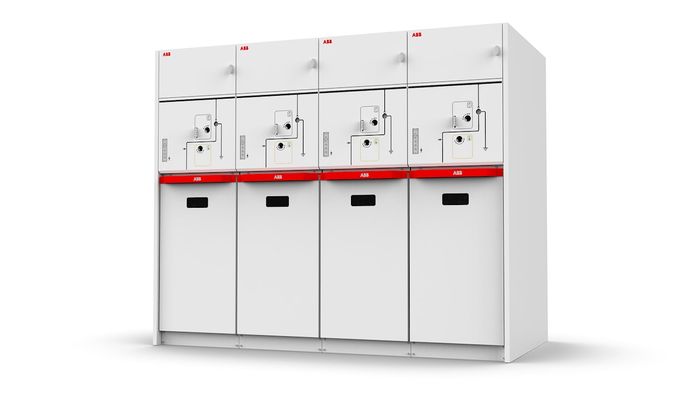
Medium-voltage systems must simultaneously meet requirements for safety, availability, and reduced environmental impact. Changes in European regulations on fluorinated gases are driving increased interest in equipment that does not use SF₆, but comparing these technologies requires distinguishing between several electrical functions that are often confused.
Isolation and disconnection are two different functions
In a high-voltage switchgear, the insulation maintains the necessary dielectric clearances between live parts, while the switching element interrupts a current under specified conditions. A piece of equipment may use air as its primary insulation while employing a different technology in its switching device. To classify a solution as “SF₆-free,” it is therefore necessary to verify all relevant compartments and components, not just its general designation.
The Role of Dry Air and Vacuum Cutting
According to ABB’s technical specifications, dry air has a global warming potential—as measured by the equivalent greenhouse gas—equal to zero, unlike SF₆. Vacuum switching can be used to interrupt the current without relying on a fluorinated gas. However, this approach requires specific design choices regarding mechanical design, footprint, insulation, and electrical test performance.
Service Continuity and Cell Classification
The IEC 62271-200 standard distinguishes several classes of service continuity, including LSC2A and LSC2B, which describe the accessibility requirements for compartments. These categories must be evaluated in light of planned maintenance operations and the other cells remaining in service. The IAC classification, for its part, describes test conditions for internal arc resistance; it does not replace risk analysis or lockout procedures.
Do not confuse the range capacity with the selected configuration
The ABB UniSec Air product line covers secondary distribution applications up to 24 kV. LSC2A configurations are rated up to 630 A, while an LSC2B configuration with a withdrawable front-end circuit breaker can reach 1,250 A, depending on the model. The 2026 documentation lists varying short-circuit and internal arc withstand ratings; the applicable values must be verified on the actual unit ordered. The presence of a maximum value in the catalog does not imply that it is available in all configurations.
Preparing to Modernize an Existing Substation
In a data center, the replacement of equipment depends as much on the security architecture as it does on the product itself. Dimensions, cable connections, control interfaces, protective measures, and load transfer conditions determine feasibility. Integration into an existing system must be evaluated to minimize downtime while ensuring operator safety.
Regulations and Life Cycle Decisions
European restrictions on fluorinated gases must be analyzed by equipment category and by implementation date. Beyond regulatory compliance, the decision involves maintenance, parts availability, expansion capabilities, and end-of-life procedures. The absence of SF₆ does not eliminate the need to calculate the environmental impacts of the entire system.
The transition to SF₆-free HTA is therefore not simply a matter of replacing a gas; it requires a review of the equipment and operational architecture. UniSec Air exemplifies this evolution for the secondary distribution of critical infrastructure.
Sources: