
 Cloud & AI Infrastructure
 Devops Live
 Cloud & Cyber Security
 Data & AI Leaders Summit
 Data Centre World
Exhibitors' Products
From the low-voltage panel to the IT rack: Choosing Between RPP, Busway, and Plug-in Distribution
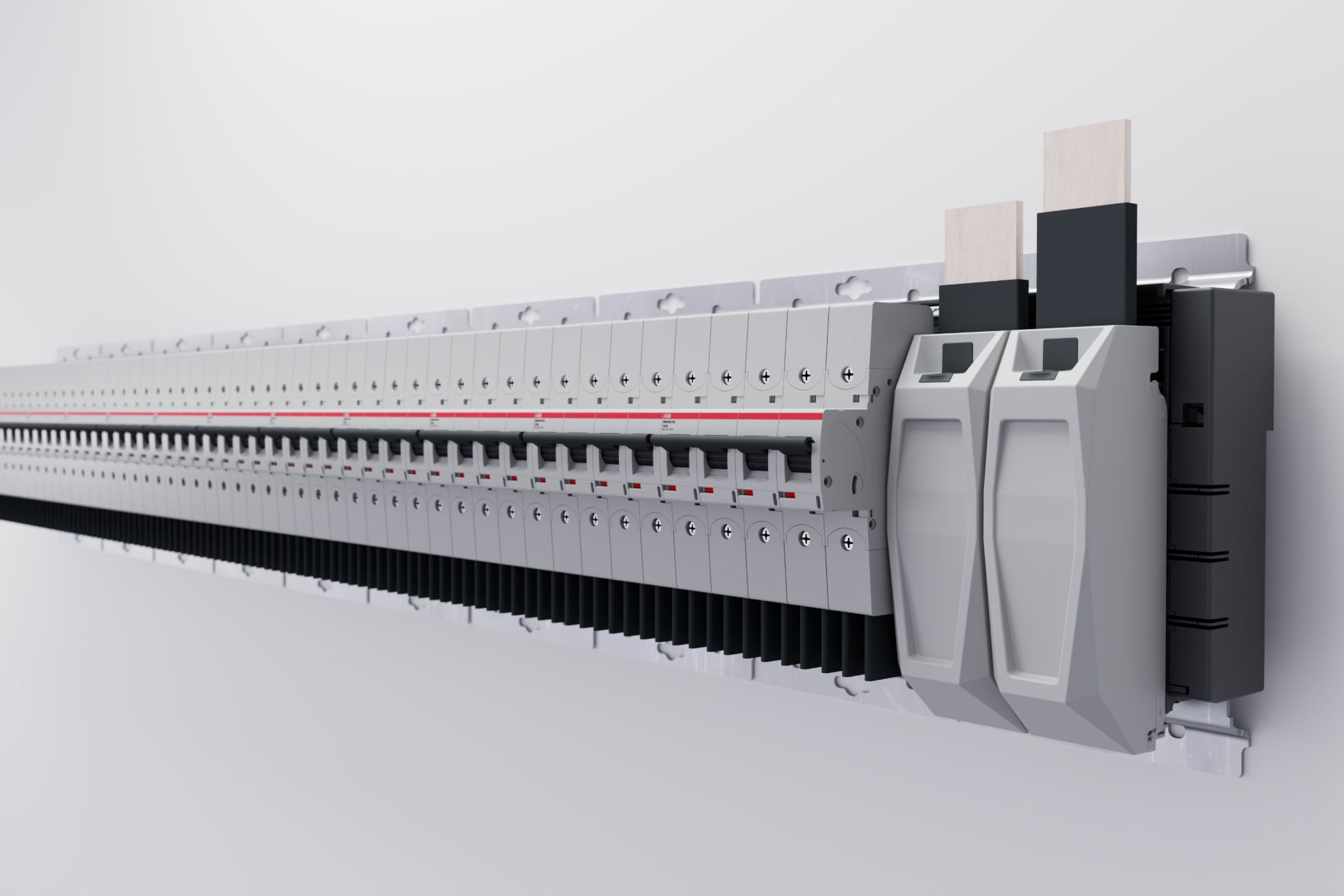
Between the low-voltage main panel and the IT racks, the final power distribution system must balance several—sometimes conflicting—requirements: delivering more power, conserving available space, allowing for future expansion, and minimizing the impact of a fault on equipment in operation. RPP and busway architectures address these objectives in different ways.
Two Ways to Align Load Distribution
The RPP (Remote Power Panel) is a distribution panel installed near the racks. It houses the protective devices for the terminal circuits and can include per-circuit metering. A busway system consists of a prefabricated electrical conduit, typically installed overhead or under a raised floor, equipped with a main power supply and tap-off units positioned according to the needs of the server rows.
Compare Footprint and Operations
An RPP concentrates protection within an enclosure accessible at a single point. The busway distributes connection points throughout the room and makes it easier to relocate power supplies when the rack configuration changes. The choice depends on density, cable run lengths, the layout of maintenance areas, the number of outlets, the redundant topology, and connection requirements. A smaller footprint does not necessarily mean less complexity in cabling or maintenance.
Selectivity remains a key factor
The feeders supplying the racks must be coordinated with the upstream protective devices. Ideally, a fault on a tap-off unit or a terminal circuit should be isolated without affecting the other rows. Coordination requires knowledge of the fault currents at the farthest points, the circuit breaker characteristics, and the limits of the busway equipment. The separation of chains A and B must remain consistent from the distribution panel to the PDU rack.
Why Plug-in Modularity Is of Interest to Operators
Plug-in distribution systems allow for the installation of multiple protective devices on a prefabricated busbar. They can facilitate the reconfiguration of feeders, but any work must comply with the manufacturer’s specifications and safety procedures. A design that protects against direct contact does not, by itself, constitute general authorization to work on live equipment.
SMISSLINE TP HP and the New Densities
ABB has announced a plug-in power distribution system for SMISSLINE TP HP capable of handling up to 800 A, designed for high-density IT infrastructure. The product portfolio calls for a gradual transition to components compatible with AC/DC and 800 VDC architectures. These announcements should be distinguished from the limitations of previous generations of SMISSLINE: the rated currents and available functions depend on the specific model selected.
Measure at each outlet
Circuit-level measurement makes it possible to monitor rack power consumption, identify imbalances, and determine the available load capacity before an expansion. Sensors and monitoring systems are essential supplements, particularly when new AI equipment rapidly changes the load distribution.
In practice, RPP and busway are often complementary architectural choices. The appropriate decision is based on an analysis of power distribution, selectivity, operations, and data center growth, rather than on a comparison of compactness alone.
Sources: