
 Cloud & AI Infrastructure
 Devops Live
 Cloud & Cyber Security
 Data & AI Leaders Summit
 Data Centre World
Exhibitors' Products
Data Centers: Designing a Resilient High-Voltage Distribution System Starting at the Network Entry Point
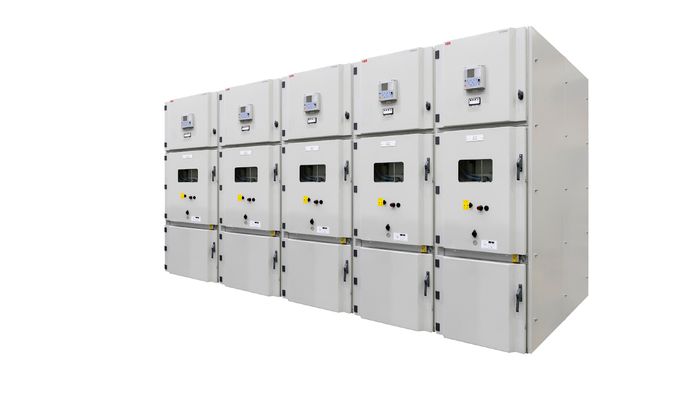
Medium-voltage connection and distribution constitute the first level of a data center’s electrical architecture. Their role is not limited to carrying high power loads; they also determine maintenance options, switching modes between power sources, and the impact of a fault on the availability of critical loads.
Choosing the Right Voltage Level
For a given three-phase power rating, increasing the voltage reduces the line current and can minimize losses and conductor cross-sections. The appropriate high-voltage level, however, depends on the connection offered by the grid operator, the total power rating, the distances to the substations, and site constraints. The choice of voltage must be evaluated over the entire life cycle, including transformers and protective devices.
Busbar systems determine operating scenarios
A dual feed alone does not guarantee a redundant power supply. The topology may include a single, split, or double busbar system, with separate physical connections and routing paths. It is necessary to examine common-cause failure risks, load recovery after an incident, maintenance of a cell, and the effect of switching operations. The ability of each source to resume expected service must be demonstrated, not merely assumed.
Examine the selectivity in each configuration
Protection relays must clear a fault on a feeder without causing a trip that is broader than necessary. The settings take into account contributions from the grid and on-site generation, transformers, trip times, and downstream protections. A multi-source system can exhibit widely varying fault currents depending on the configuration of the interconnections; analyses must cover these distinct operating conditions.
"Internal arc" and "service continuity" do not mean the same thing
The IEC 62271-200 standard specifies, among other things, the characteristics of high-voltage switchgear with metal enclosures. The IAC classification describes resistance to internal arcing under defined test conditions and for specific accessible sides. The LSC classification pertains to the ability to keep certain parts in service while accessing other compartments. None of these classifications, on its own, permits work without lockout or operation without a risk assessment.
Supervision helps with diagnosis
Digital relays, sensors, and communication systems enable the centralization of electrical measurements, protection events, and equipment statuses. IEC 61850-compliant architectures can facilitate standardized data exchange, but true interoperability must be verified on a per-device basis. A properly time-stamped event log speeds up post-incident analysis and restoration to service.
ZS1 and ZS2: Adapting the Equipment to the Grid
Within the ABB UniGear product line, the ZS1 covers primary distribution applications up to 24 kV, with busbar ratings of up to 4,000 A and short-time withstand capacity of up to 63 kA, depending on the version. The ZS2 covers up to 36 kV, 3,150 A, and 31.5 kA. These maximum ratings are not necessarily combinable within a single configuration. Furthermore, air insulation must be distinguished from the circuit breaker’s interrupting technology: it does not automatically imply the complete absence of SF₆.
HV power systems form the foundation of the electrical chain “from the source to the rack.” Their reliability depends first and foremost on the topology, protection calculations, and operating scenarios—long before the selection of specific equipment models.
Sources: