
 Cloud & AI Infrastructure
 Devops Live
 Cloud & Cyber Security
 Data & AI Leaders Summit
 Data Centre World
Exhibitors' Products
Low-Voltage Power Distribution in Data Centers: Density, Modularity, and Condition-Based Maintenance
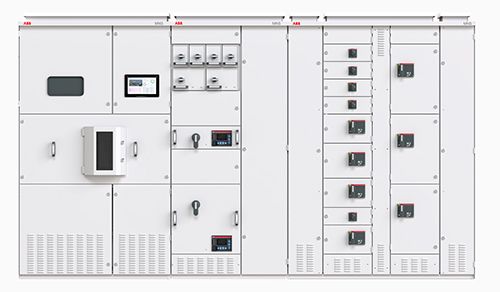
The increase in IT density is changing the constraints placed on general-purpose low-voltage switchgear. These systems must distribute more power within limited technical spaces, while maintaining the ability to isolate faults, perform maintenance, and add new feeders. The performance of a switchgear system cannot, therefore, be reduced to its rated current alone.
Electrical Density and Thermal Limits
At a given voltage, an increase in power leads to an increase in current. Losses in conductors and connections vary proportionally to the square of the current: the busbar layout, contact quality, ventilation, and permissible temperatures become critical factors. A compact design must also ensure that cables remain accessible and that sufficient clearance is provided for maintenance work. Performance is evaluated at the level of the complete switchgear assembly, in particular in accordance with IEC 61439-1 and IEC 61439-2.
Designing True Scalability
A site can add new racks, switch to a different cooling technology, or change the load distribution. Modularity is not simply a matter of having free slots; it requires planning ahead for busbar capacity, short-circuit current reserves, connections, and access space. Initial oversizing can tie up space and capital; phased expansion, on the other hand, requires a coherent architecture from the outset.
From scheduled maintenance to condition-based maintenance
The data generated by protective equipment, sensors, and monitoring systems make it possible to track certain deviations over time. Thresholds, trends, and historical data can help trigger an intervention when an abnormal condition arises, rather than only at fixed intervals. Predictive analytics tools do not eliminate mandatory inspections or logging procedures; rather, they primarily help focus maintenance efforts and document decisions.
Protection that remains selective
The purpose of circuit breaker coordination is to clear a fault as close as possible to its source. In systems powered by multiple sources, it is necessary to analyze the various coupling configurations and short-circuit current levels. Digital monitoring provides useful information, but it does not replace protection studies or selectivity validation.
Cybersecurity is now being incorporated into the design of control panels
As panels become interconnected, identity management, software updates, network segmentation, and maintenance access become key factors in operational safety. A secure development process or the certification of a component does not automatically qualify the entire installation. Interfaces with the BMS, SCADA, and monitoring systems must be verified at the site level.
MNS 4.0 as an example of this trend
The new ABB MNS 4.0 platform combines a rated current of 4,000 A, short-circuit ratings of 65 kA depending on the configuration, a voltage of 415 V AC, and protection up to IP43. It incorporates modularity, AI-driven monitoring, and cybersecurity into its design. ABB indicates commercial availability in 2027; future DC or hybrid variants should be distinguished from the AC specifications currently presented.
A truly sustainable low-voltage distribution system is one whose performance remains consistent after several expansion phases, and whose operational data help maintain the expected level of availability.
Sources: